
Our Japanese karate syllabus
A complete syllabus designed by senior Japanese masters of JKS, Japan Karate Shoto Federation. We teach the essence of karate, and that is what makes champions.
Real Japanese karate, not only sport karate
Our syllabus was designed by senior Japanese masters of JKS. It teaches the essence of karate first, and produces champions as a result.
Kihon
Stances, punches, kicks and blocks, repeated with correct form until they become natural.
Kata
The traditional forms that carry the art’s techniques, rhythm and spirit from master to student.
Kumite
Partner work from prearranged drills to free sparring: timing, distance and control.
Dō, the way
Etiquette, the dojo kun and self-control: karate as a way of life, not just a game of points.
Many clubs train only for medals. We teach the complete art, so students who want to compete step onto the mat with real karate behind them.
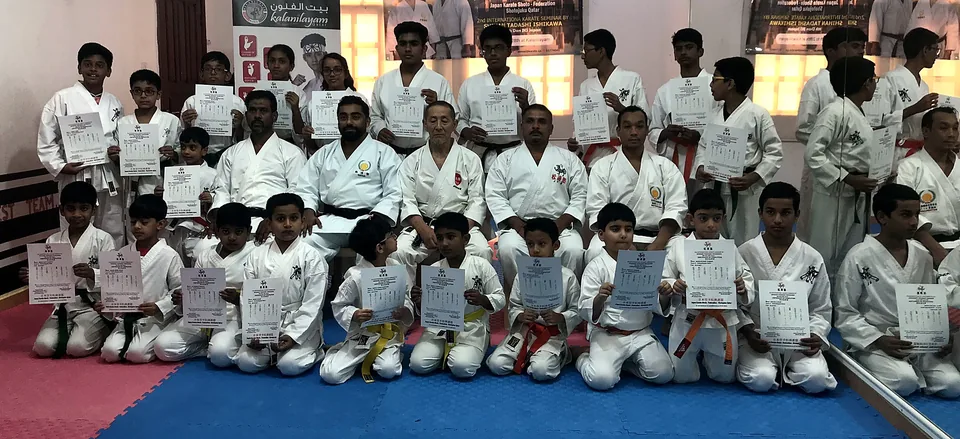
Trained in Japan, taught in Doha
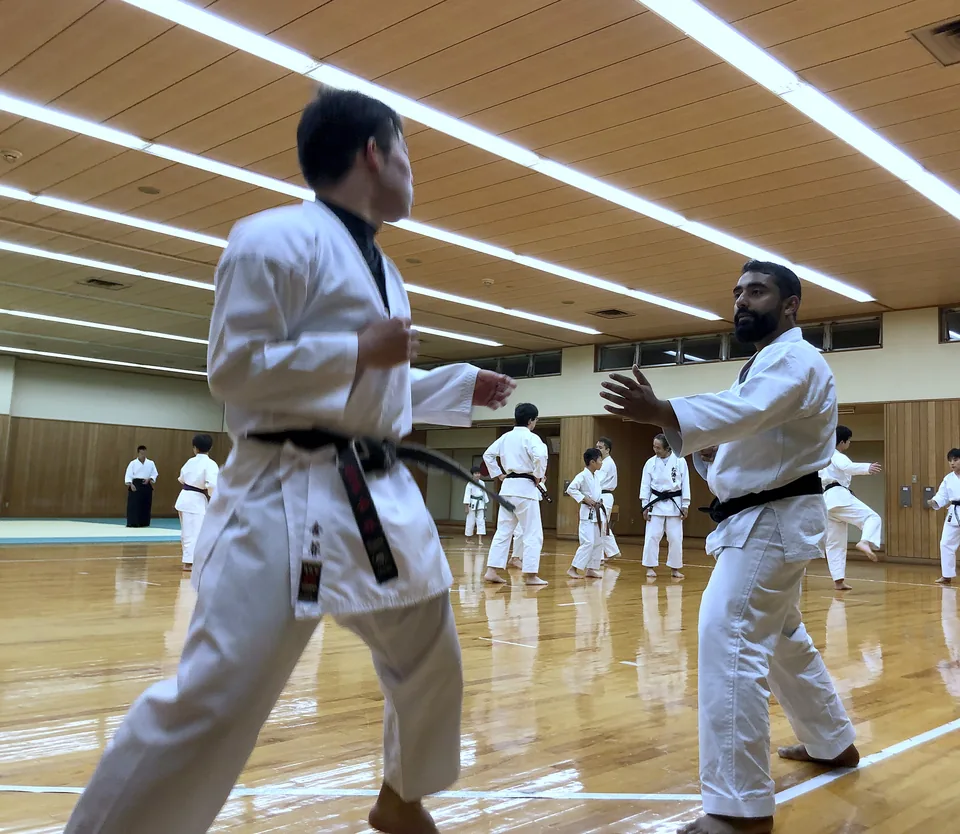
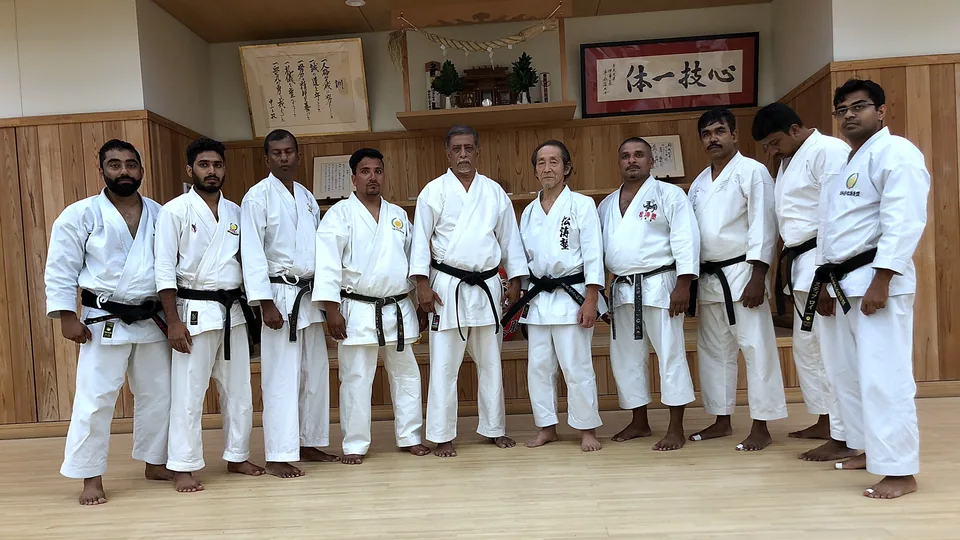
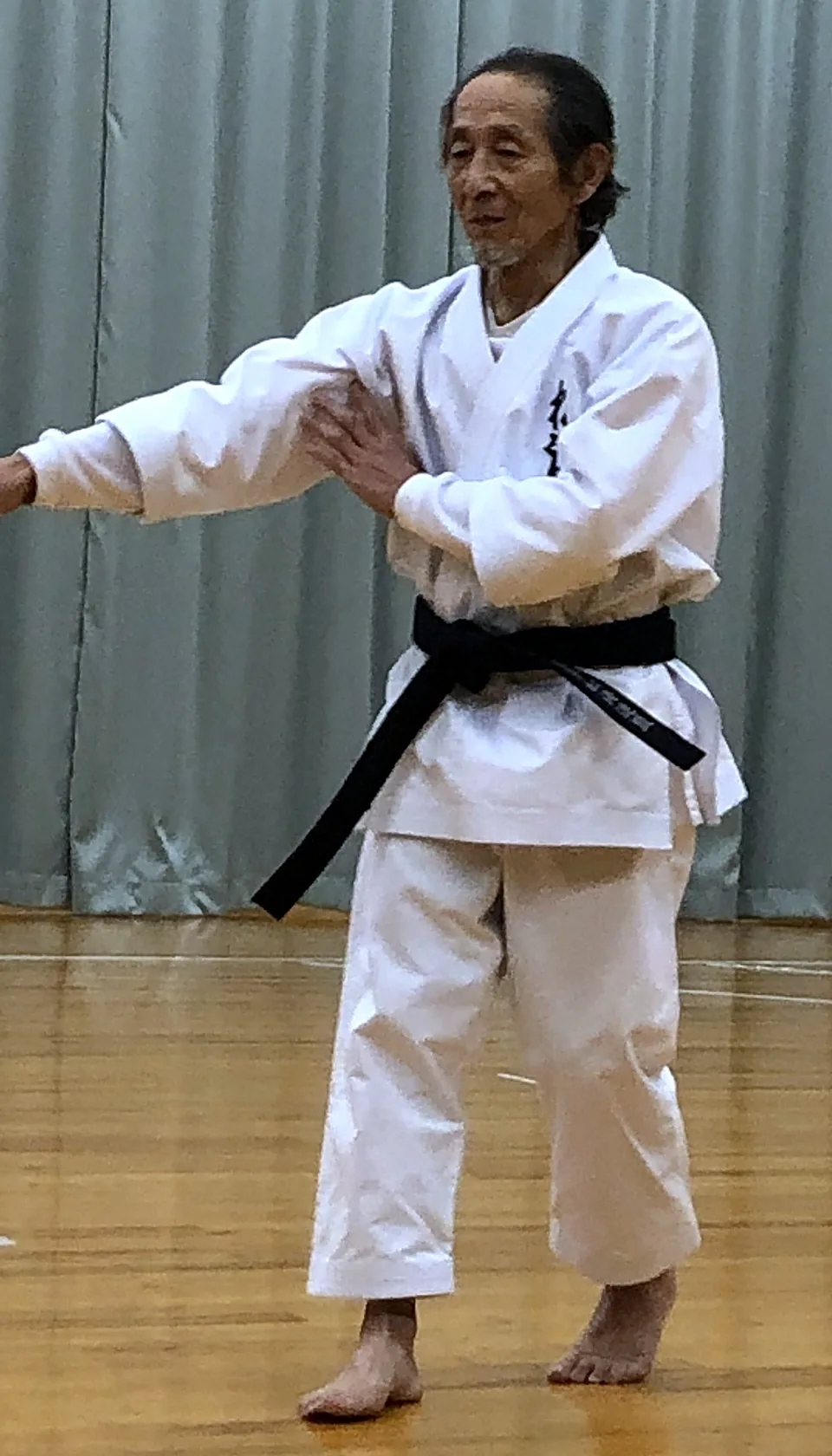
Sensei Najmal trains in Japan with senior JKS instructors and brings the same syllabus, etiquette and standards back to every class in Qatar.
Essence first, champions follow
Sport karate rewards fast points under competition rules. Traditional karate builds the whole person: strong stances, powerful technique, correct breathing, timing, awareness and a calm mind, all trained through kata and kumite as the Japanese masters intended.
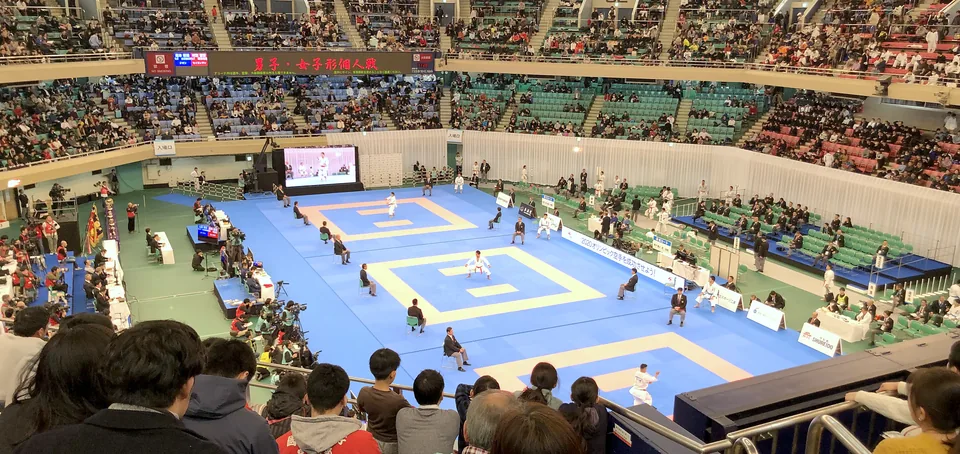
Our students learn both. The syllabus gives them real karate, and our competition squad adds tournament strategy on top. That is why our karateka can win medals and still perform kata with the depth of a traditional dojo.
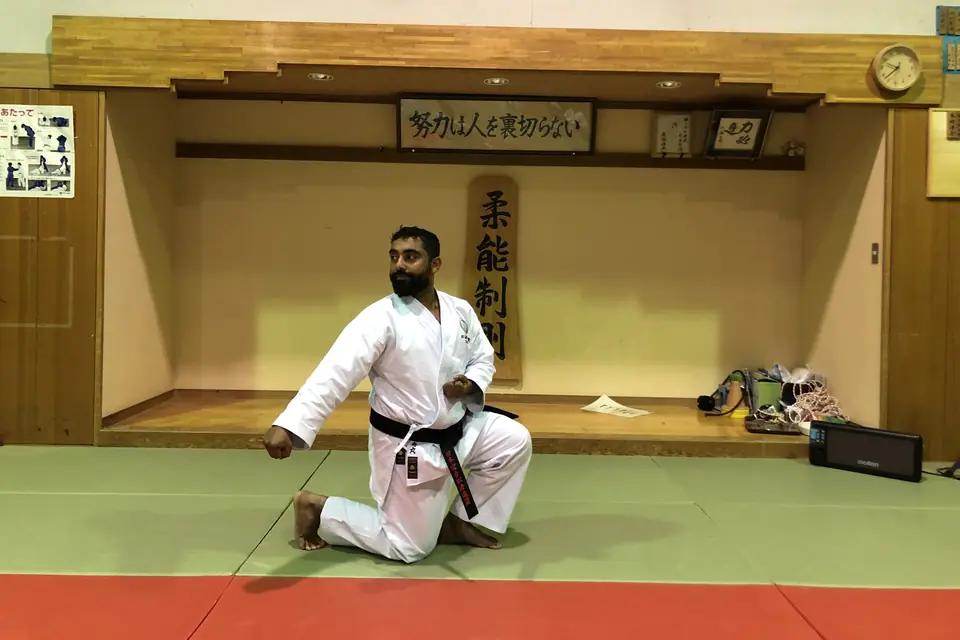
The path of grades
Every grade has clear kihon, kata and kumite requirements, so students always know what to work on next.
- Beginner
- Kyu grades (coloured belts)
- Shodan, 1st Dan black belt
- Nidan and beyond
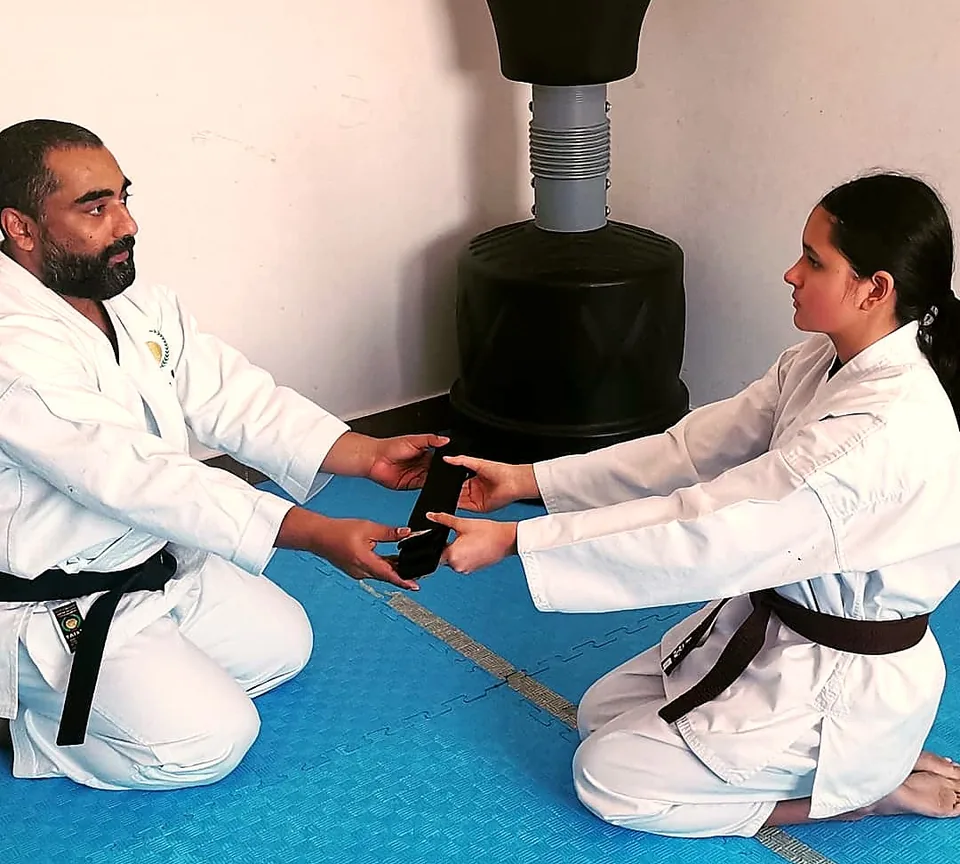
Graded by your sensei
You take a grading when Sensei Najmal, a certified kata and kumite judge, decides you are ready, never just because time has passed.
Recorded in DojoExpert
Grades, belt requirements and progress are tracked in the student portal and the Dojo Login app. Student portal.
Same standard as Japan
Because we follow the JKS syllabus, a Chi Club grade means the same techniques and kata as in a dojo in Japan.
Beyond the dojo: gradings, championships and school sport
Training with us connects students to official karate in Qatar and abroad.
Qatar federation gradings
Our students regularly attend gradings, seminars and championships of the Qatar Taekwondo, Judo and Karate Federation, where Sensei Najmal is an accredited coach.
International championships and seminars
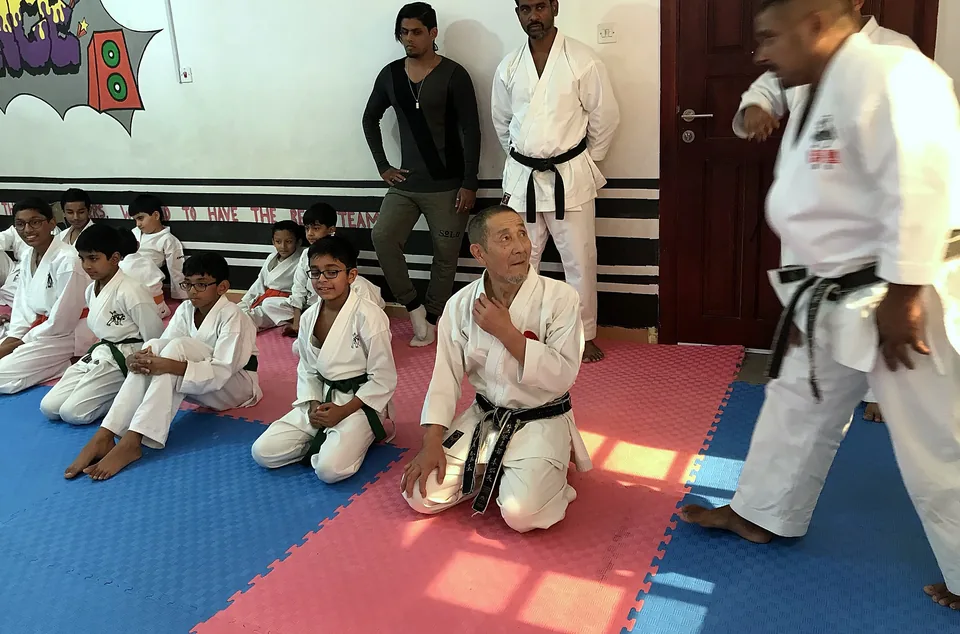
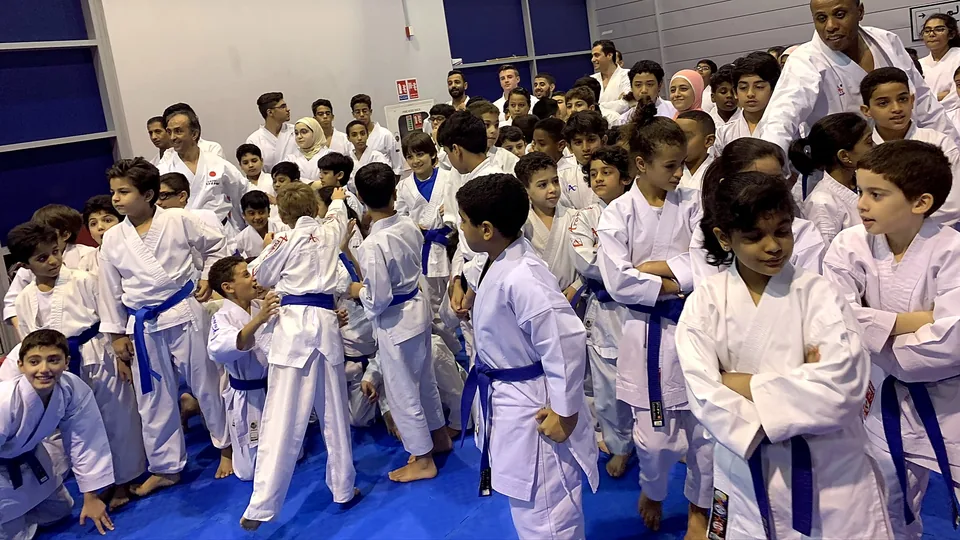
We organise and take part in international karate championships and seminars, so students train and compete with karateka from other countries.
School Olympic Program
Our children take part in Qatar’s School Olympic Program, representing their schools in karate.
A black belt is a lifetime achievement
Earning a black belt takes years of discipline, and it stays with you for life. It is recognised worldwide, and it shows schools, universities and employers the commitment, focus and resilience behind it, which makes it a valuable addition to academic and personal profiles.

The dojo kun
Five precepts recited at the end of class in Shotokan dojos. Every line opens with 一 (hitotsu, “one”), because each precept matters as much as the others.
- 人格完成に努むることSeek perfection of character.
- 誠の道を守ることBe faithful.
- 努力の精神を養うことEndeavour.
- 礼儀を重んずることRespect others.
- 血気の勇を戒むることRefrain from violent behaviour.
Syllabus questions
Want to see a class? Book a free trial.
Is your karate traditional or sport karate?
Traditional first. Students learn the complete Japanese art (kihon, kata, kumite, etiquette and self-defence) to the JKS syllabus. Students who want to compete train for WKF tournaments on top of that foundation, not instead of it.
Who designed the syllabus?
Our syllabus is the Japanese syllabus of JKS (Japan Karate Shoto Federation), designed by senior Japanese masters, and taught in Doha by Sensei Najmal Ibrahim, 6th Dan and direct member of JKS.
How do gradings work?
Students grade through the kyu grades to black belt (1st Dan) and beyond. Each grade has set kihon, kata and kumite requirements, and you grade when Sensei Najmal decides you are ready.
Can adults and older beginners follow the same syllabus?
Yes. Adults and our 40+ students follow the same Japanese syllabus, adapted in pace and intensity to each person.
Your first class is free
Message us on WhatsApp and try a class this week. No experience, no uniform and no commitment needed.