
Kids karate in Doha: the activity that builds confidence
Karate classes for children aged 4 to 14 across Doha. Your child gets fitter, more focused and more confident, learns to look after themselves, and earns every belt they wear.
Why karate is one of the best kids’ activities in Doha
Parents looking for a sport or after-school activity in Qatar want something their child will enjoy and that teaches real life skills. Karate does both. In one class your child runs, kicks, laughs and sweats, and also learns to listen, wait their turn, bow to their partner and keep trying when something is hard.
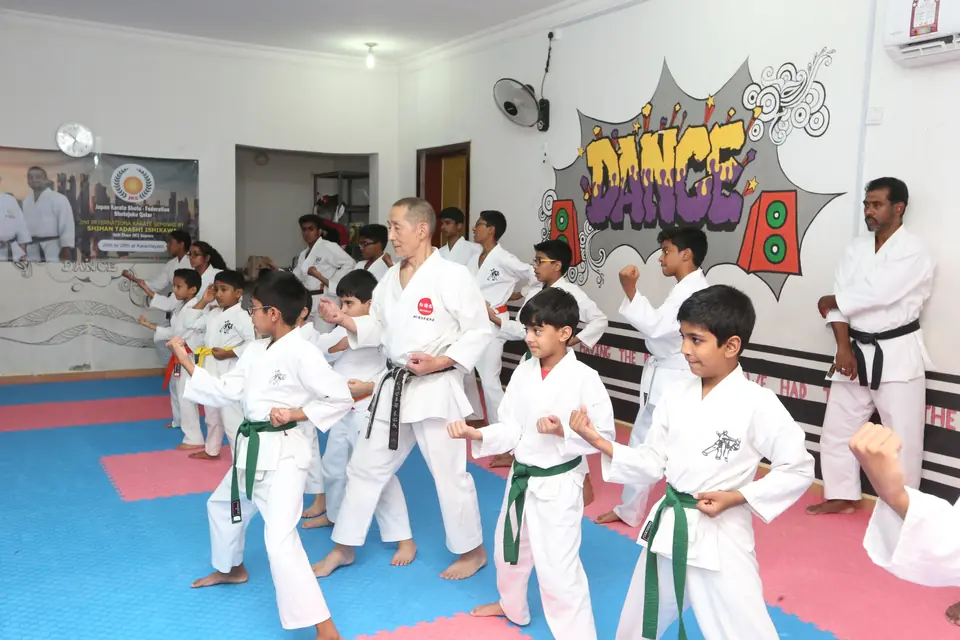
Our children’s karate follows the Japanese syllabus of JKS, taught by Sensei Najmal Ibrahim, 6th Dan, and his black-belt instructors. Every belt is a clear goal, so children see their own progress and are proud of it.
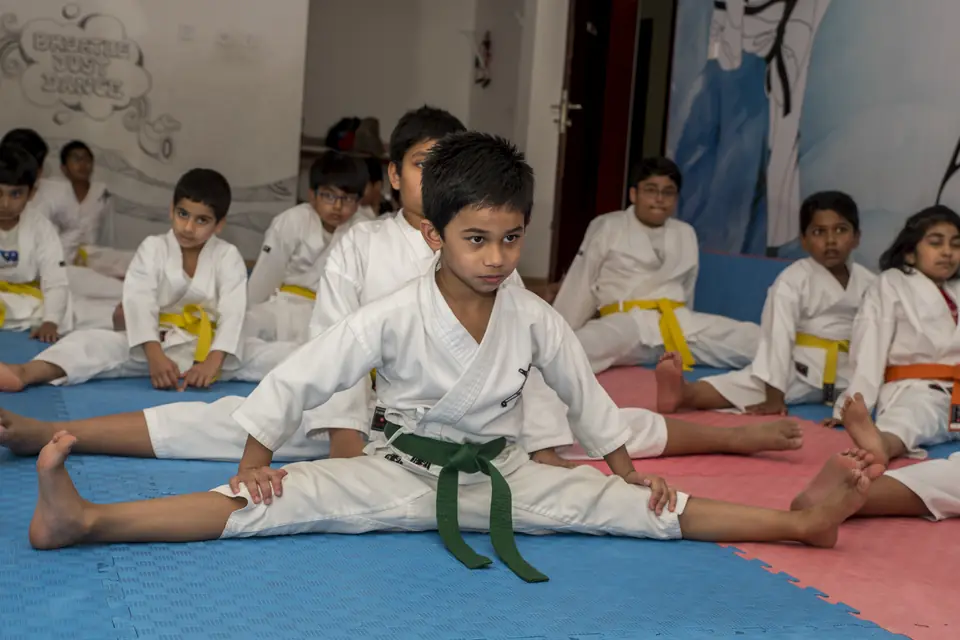
What your child gains
The benefits parents notice first.
Confidence
Standing in front of the class, earning a new belt and mastering a kata teaches children they can do hard things.
Focus and discipline
Bowing in, listening to the sensei and repeating techniques builds the concentration that helps with schoolwork.
Fitness and coordination
Kicks, stances, stretching and games build strength, balance and flexibility, without screens.
Self-defence and safety
Age-appropriate self-defence: awareness, keeping distance, blocking, breaking free and getting help.
Respect and friendship
Children train with kids from many schools and nationalities, and learn to respect partners, parents and teachers.
Goals they can see
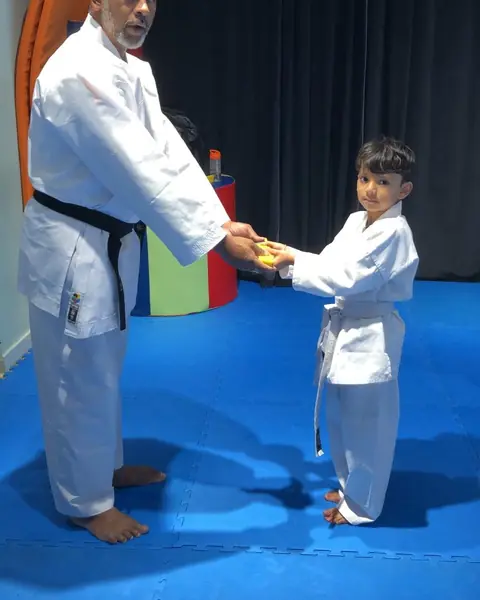
Coloured belts, gradings and competitions give children milestones to aim for, and memories they keep.
How karate builds focus and good study habits
Many bright children struggle less with ability than with sitting still, listening and staying on task. Every karate class trains exactly that.
Mokuso: a reset button for attention
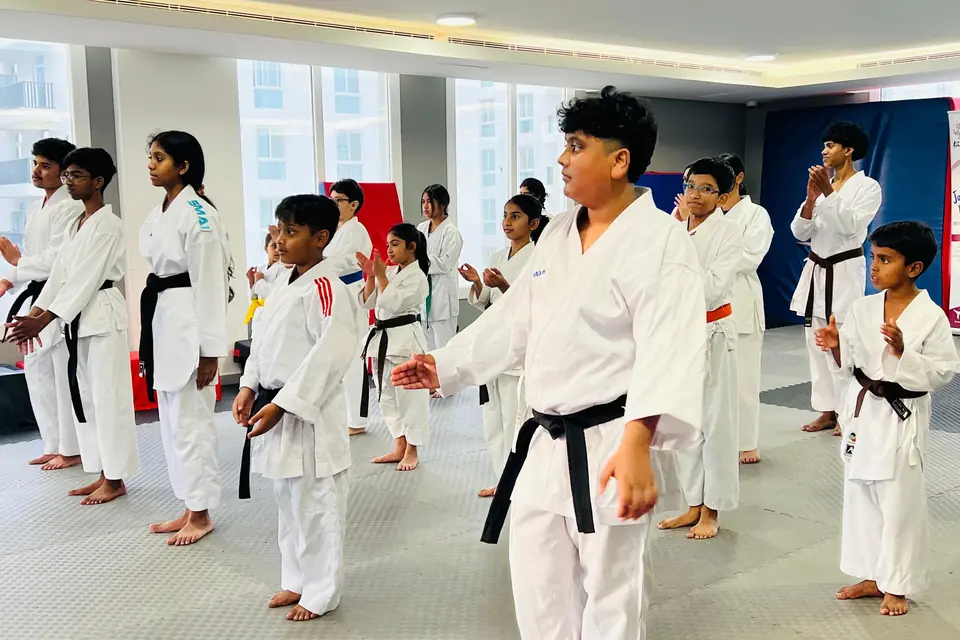
Each class opens and closes with mokuso, a short silent sit with slow breathing. Children practise switching off distractions and bringing their full attention into the room.
Kata: memory and sequencing
Kata are set patterns of 20 to 50 moves in several directions. Learning them trains memory, sequencing and concentration, the same skills children use for revision and exams.
Listen first, then act
Children bow, look at the instructor, listen to the whole instruction and only then move. That habit of impulse control and active listening carries into the classroom.
Screen-free energy release
An hour of barefoot training turns restless energy into structured movement, so evenings and homework time are often calmer.
Shy child or high-energy child? Karate helps both
Shy or anxious children learn to stand tall, look forward and use a strong kiai (spirit shout). Every belt is a goal they reach by their own effort, which builds quiet, earned confidence.
High-energy children learn that real strength is control. Every punch and kick stops on target, and every class ends with the dojo kun, which closes with “refrain from violent behaviour”.
Children who don’t like team sports do well too: nobody sits on the bench and nobody is compared with anyone else. Each child competes only with who they were yesterday.
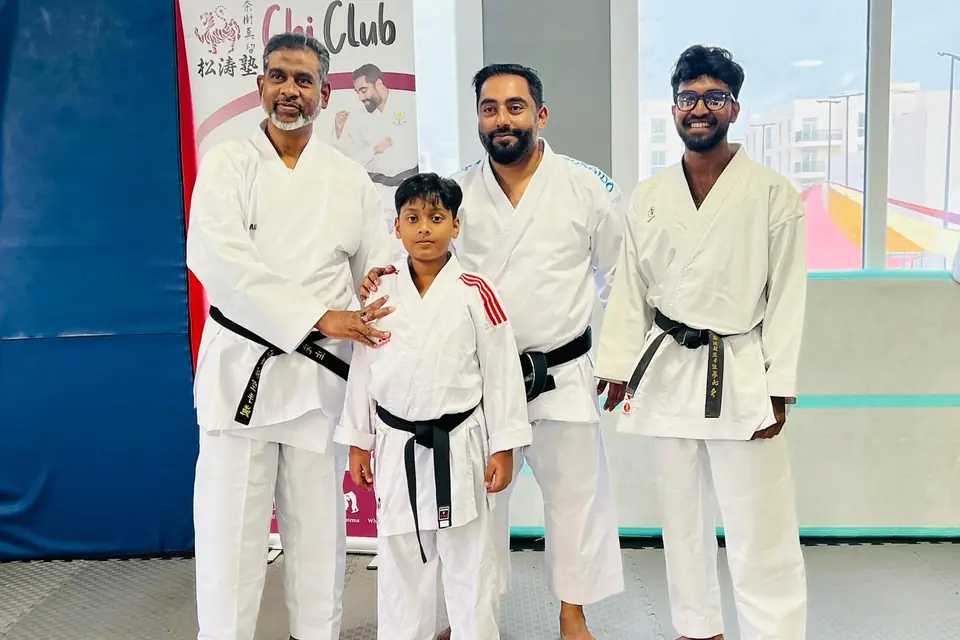
Strong, not aggressive: the mental benefits of karate
Karate is a peaceful martial art. Its first rule is 空手に先手なし: there is no first attack in karate.
Some combat sports focus mainly on hitting and winning fights. Traditional Japanese karate builds power and the self-control to keep it in check. Children and adults become physically strong and mentally calm: confident enough to walk away, and capable enough to protect themselves if they ever must.
Self-control
Every technique stops exactly on target. Students learn to control their body, their temper and their reactions.
Calm under pressure
Breathing, kata and kumite teach the mind to stay steady when things get difficult, in exams, sport and daily life.
Confidence without arrogance
Real confidence is quiet. Karateka stand tall and speak up, without needing to prove themselves.
Respect and humility
Bowing to teachers, partners and the dojo teaches children to respect others, and to accept correction gracefully.
Focus and mindfulness
Every class opens and closes with mokuso, a moment of silent meditation that trains attention and a clear mind.
Resilience
Failing a technique, trying again and finally earning a belt teaches patience, perseverance and a growth mindset.
Our dojo kun, recited by every student, ends with “Refrain from violent behaviour.” Parents often tell us their child became calmer, more patient and kinder at home and at school after starting karate.
Classes by age
From a first bow at four to the competition squad.
- 子Ages 4 to 7
Little Warriors
Fun, structured karate that builds coordination, listening and confidence.
- 少Ages 8 to 14
Junior karate
Belt-by-belt Shotokan training in kihon, kata and kumite.
- 競Selected juniors and adults
Competition squad
Kata and kumite training for national and international tournaments.
- 遠Members of any age, at home or travelling
Hybrid online karate
Train in the dojo and online: live sessions and follow-along videos in the Dojo Login app.
- 車椅子Wheelchair users of all ages
Wheelchair karate
Karate adapted to be trained from the chair, with the same etiquette and kata.
Beyond the dojo: gradings, championships and school sport
Training with us connects students to official karate in Qatar and abroad.
Qatar federation gradings
Our students regularly attend gradings, seminars and championships of the Qatar Taekwondo, Judo and Karate Federation, where Sensei Najmal is an accredited coach.
International championships and seminars
We organise and take part in international karate championships and seminars, so students train and compete with karateka from other countries.
School Olympic Program
Our children take part in Qatar’s School Olympic Program, representing their schools in karate.
A black belt is a lifetime achievement
Earning a black belt takes years of discipline, and it stays with you for life. It is recognised worldwide, and it shows schools, universities and employers the commitment, focus and resilience behind it, which makes it a valuable addition to academic and personal profiles.
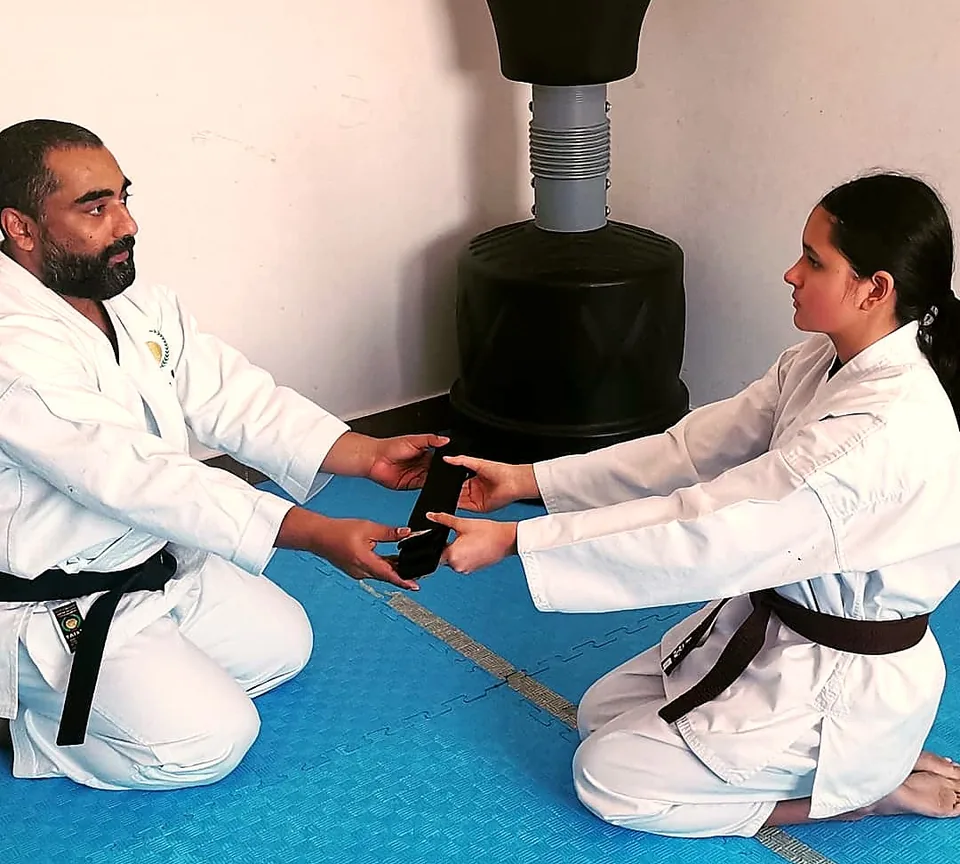

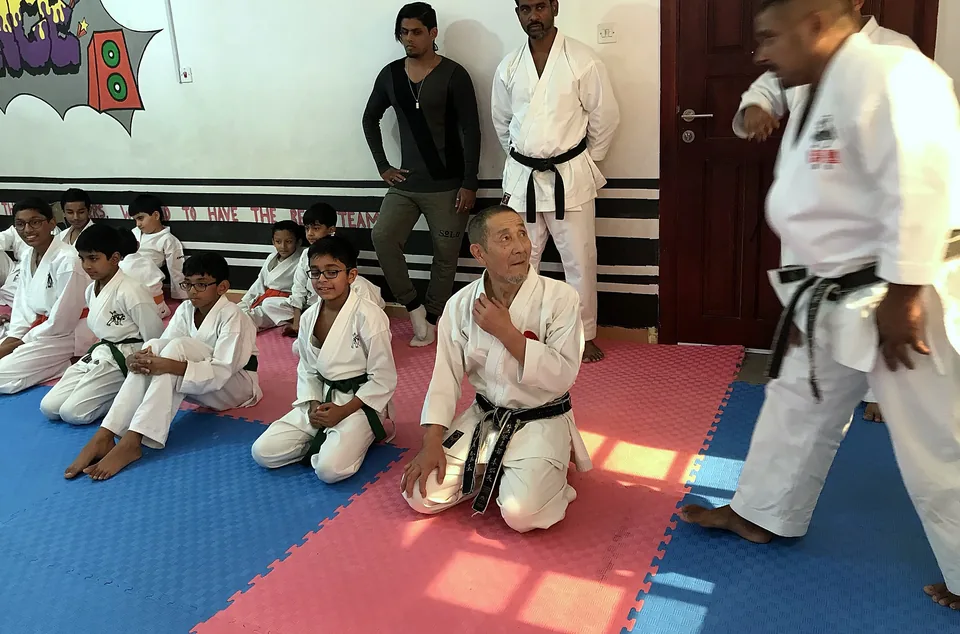
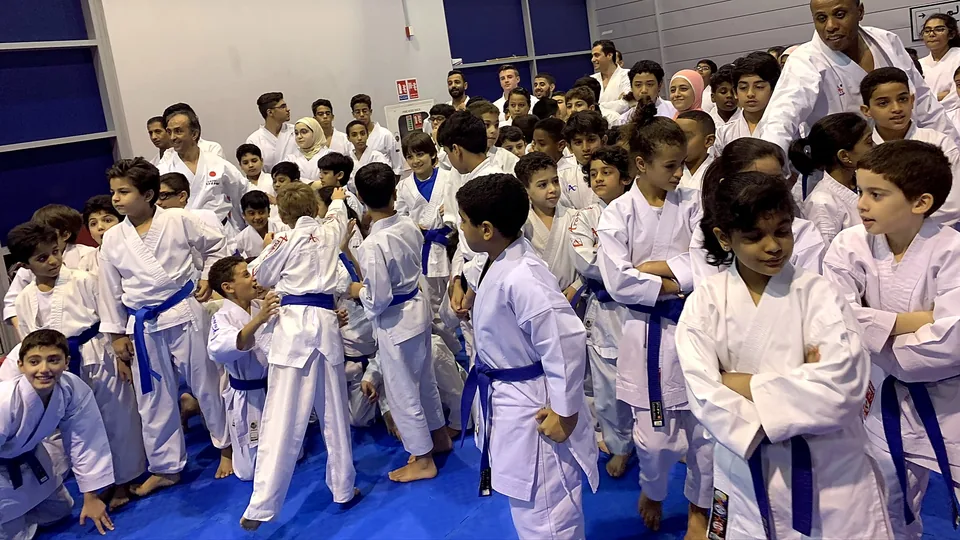
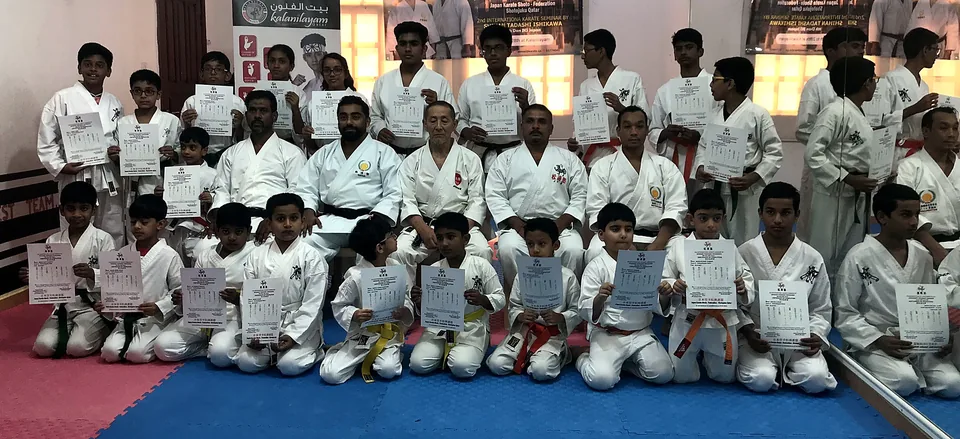
Kids karate near you
After-school and weekend classes in Abu Hamour, Bin Mahmoud, Al Messila, The Pearl and Al Wukair. See full times.
Questions parents ask
Anything else? Message us on WhatsApp.
What age can my child start karate?
From age 4. Little Warriors (4 to 7) learn through games and drills, and Juniors (8 to 14) follow the full belt syllabus.
Can a 3-year-old do karate?
Our youngest class, Little Warriors, starts at age 4, when most children can follow simple instructions in a group. If your child is 3, message us: we can suggest when to start and how to prepare, and siblings aged 4 and over can begin now.
Is karate good for teenagers?
Yes. Teens aged 12 to 17 train in their own class or with adults, working towards black belt. Karate gives teenagers fitness, confidence, a calm way to handle exam stress, competition opportunities and an achievement that adds value to university applications.
Is karate safe for children?
Yes. Classes are led by Sensei Najmal and black-belt instructors, start with a proper warm-up, and use controlled, age-appropriate drills. Sparring is introduced gradually with protective gear.
Will karate make my child aggressive?
No, the opposite. Traditional Japanese karate is a peaceful martial art: its first rule is “there is no first attack in karate”, and every student recites the dojo kun, which ends “refrain from violent behaviour”. Children learn to control their strength, stay calm, show respect and walk away from trouble, using their skills only to protect themselves. Parents often see their child become calmer and more patient.
Can karate help a child with a short attention span or lots of energy?
Many parents find it does. Karate gives energetic children a structured outlet: short, varied drills, clear rules, bowing in and out, and a belt goal to work towards. Children practise listening, waiting their turn and focusing on one task. It is not a treatment for ADHD or any condition, but it works well alongside the advice of your child’s doctor or school. Tell us about your child’s needs before the first class so we can help them settle in.
Is karate a good alternative to screen time?
Yes. An hour of karate is an hour of movement, real friendships and face-to-face respect, with no screens. Children come home tired, proud and with a new skill to show you.
Does karate help with bullying?
Karate builds the confidence, posture and assertive voice that make children less likely to be targeted, and teaches them to walk away, get help and protect themselves if they must.
When are kids’ classes?
After school from 4 pm on Mondays and Wednesdays in Abu Hamour and on Sundays and Tuesdays in Al Messila, Friday and Saturday afternoons in Bin Mahmoud, and evening classes at The Pearl and Al Wukair.
Can my child compete or represent their school?
Yes. Our students attend Qatar Taekwondo, Judo and Karate Federation gradings and championships, and children take part in Qatar’s School Olympic Program for their schools.
Is a black belt useful for school or university?
A black belt is a lifetime achievement recognised worldwide. It shows years of commitment, discipline and resilience, which adds real value to school, university and scholarship applications.
What if my child is shy, uncoordinated or not sporty?
Karate suits children who dislike noisy team sports. Nobody sits on the bench and nobody is compared with anyone else; your child progresses at their own pace, belt by belt, and coordination improves with every class.
How can I follow my child’s progress?
Parents use the free Dojo Login app (iPhone and Android) to see attendance, the requirements for the next belt, practice videos from Sensei Najmal and grading results.
Can my child try a class first?
Yes. The first class is a free trial. Message us on WhatsApp to book it.
Looking for other activities? Older children and teens can also try self-defence and aikido at thechiclub.org.
Your first class is free
Message us on WhatsApp and try a class this week. No experience, no uniform and no commitment needed.